


Built for the Early Fire Detection Requirement
Many new homes in Twin Falls County fall under the county's early fire detection system requirement (Ordinance 277). If your permit or fire district has flagged it, the system has to be designed, installed, inspected, and monitored before the home is signed off.
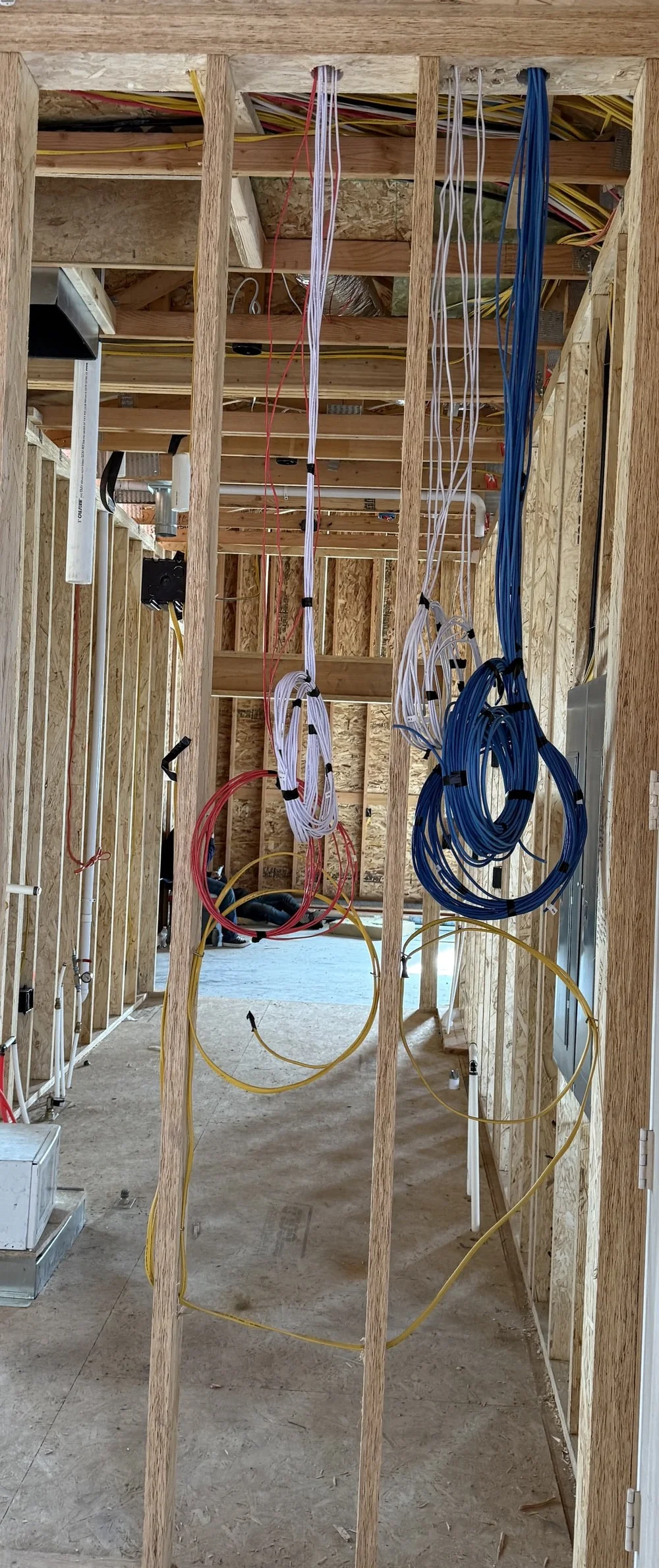
We handle that as one job: detector layout from your plans, low-voltage rough-in before drywall, the rough-in inspection with the fire marshal, final test, and central-station monitoring that stays with the homeowner.
We lay out detectors room by room from the plans, show up at rough-in with the other low-voltage work, and coordinate the inspection so it doesn't hold up your schedule.
Send plans for a quote →Fire Detection, Answered
Q01Does my new home need a monitored fire detection system?
It depends on your permit and fire district. Twin Falls County's Ordinance 277 requires an early fire detection system on certain new homes. Your building permit or fire district will tell you if it applies; if you're not sure, send us the address and plans and we'll find out.
Q02Is this the same as the smoke alarms the electrician installs?
No. Standard interconnected smoke alarms only sound inside the house. A monitored system reports to a central station around the clock, which dispatches the fire department whether or not anyone is home.
Q03How is it monitored?
Through a cellular communicator to a professional central station, so it doesn't depend on a phone line or home internet. Monitoring is billed to the homeowner, not the builder, so it continues after the home is sold.
Q04When does it get installed?
Rough-in happens with the rest of the low-voltage work, before insulation and drywall. Devices, panel, and final test happen at trim-out, followed by the final inspection.
Q05What about yearly inspections?
Monitored fire systems should be tested annually. We can schedule that as a separate service once the system is in.
How We Approach It
Assess & Review
We start by understanding the project — walking the property, or reviewing your plans for new construction — to map constraints before recommending a thing.
Custom Plan
A clear recommendation built around your layout, budget, and priorities — with the right equipment matched to the job, not a generic package.
Clean Install
Mounting, cabling, configuration, testing, and cleanup — done neatly and built to keep working reliably for years.
Walkthrough
Before we leave, we show you how everything works — and stay your direct local contact long after the job is done.